Last Tuesday, I was staring at the clock, watching the hands tick toward 5:00 PM with genuine dread. You know that feeling. The one where your brain has officially shut down, the kids are asking “what’s for dinner?” for the third time, and the only thing in your fridge is a lonely carton of eggs and a sad-looking bunch of asparagus. I wanted something fancy. I wanted brunch vibes. I wanted to feel like I hadn’t just thrown a frozen pizza in the oven.
So, I decided to make Eggs Benedict. Specifically, I decided to make the hollandaise sauce from scratch.
Real talk: I used to be terrified of hollandaise. It’s the sauce that breaks people. It splits. It curdles. It turns into weird yellow soup that tastes like regret. I spent years buying the jarred stuff, which is fine if you’re lazy, but it never quite hits the spot. It lacks that rich, velvety mouthfeel that makes you close your eyes and sigh.
But here’s the thing—I finally cracked the code. After three failed attempts in the last month (yes, I threw away three bowls of broken sauce), I figured out a method that actually works. Every. Single. Time. It’s not about fancy equipment or hours of whisking. It’s about temperature control and a little trick with warm water that changes everything.
This foolproof hollandaise sauce is the answer to “5pm and nothing planned.” It takes 15 minutes. You can make it while your eggs poach. It tastes like a high-end brunch spot, but it’s made with ingredients you probably already have. If you’ve been avoiding hollandaise because you think it’s too hard, stop right now. This recipe is going to save your weeknight dinner—or your Sunday brunch. Let’s get into it.
Why You’ll Love This Hollandaise Sauce
I’ve made this sauce more times than I care to admit, and it has completely changed how I approach “fancy” dinners. It’s not just about Eggs Benedict. It’s about realizing that restaurant-quality food doesn’t require a culinary degree or a team of sous chefs. Here’s why this hollandaise sauce has earned a permanent spot in my rotation:
It Actually Works — Seriously. I’ve tested this method with different butters, different egg sizes, and even when I was half-asleep. It doesn’t split. It stays creamy and glossy. If you follow the steps, you get a perfect sauce. No guesswork.
Lightning Fast — From cold ingredients to a warm, creamy sauce takes about 10-15 minutes. That’s faster than ordering takeout and waiting for the driver. I can have this ready while the kettle boils for tea. It’s the ultimate speed-dinner hack.
Only 4 Ingredients — You don’t need a pantry full of exotic spices. You need egg yolks, butter, lemon juice, and salt. That’s it. Simple, clean, and recognizable. No weird thickeners or stabilizers hiding in the list.
Versatile AF — Okay, it’s called hollandaise for Eggs Benedict, but don’t limit it. I pour this over roasted asparagus, grilled steak, steamed broccoli, and even drizzle it over my grilled peach burrata salad in the summer. It’s a magic sauce that makes boring veggies taste expensive.
Minimal Cleanup — You’re using one bowl (or a blender) and maybe a small saucepan. That’s it. No dozens of pans to scrub. For a busy cook, this is the holy grail.
This sauce is my go-to when I want to feel like a good cook without the stress. It’s reliable, delicious, and makes you feel like a pro. Trust me, once you make this, you’ll never buy jarred hollandaise again.
Ingredients You’ll Need
Here’s the best part: you probably have 90% of this already. Hollandaise is deceptively simple. It’s not about complexity; it’s about technique. But the quality of your ingredients matters because there are so few of them.
The Base
Egg Yolks (3 large) — This is the heart of the sauce. Use fresh eggs if you can. Room temperature yolks emulsify better, so take them out of the fridge 30 minutes before you start. If you’re short on time, just warm the bowl slightly. I always keep a few extra eggs on hand for this.
Unsalted Butter (1 cup / 2 sticks / 226g) — Use high-quality butter. This is the main flavor, so if your butter tastes bland, your sauce will too. I use Kerrygold or Plugra. Melt it and keep it warm (not hot). Don’t use salted butter because you need to control the salt level at the end.
Lemon Juice (1 tablespoon) — Freshly squeezed is non-negotiable. Bottled lemon juice has a preservative taste that clashes with the rich butter. Squeeze a lemon yourself. It takes 10 seconds.
Water (1 tablespoon) — This is the secret weapon. A tiny bit of warm water helps stabilize the emulsion and prevents the eggs from scrambling. It’s the difference between a thin sauce and a thick, luxurious one.
The Seasoning

Salt (½ teaspoon, or to taste) — Kosher salt is best because you can pinch it easily. Taste as you go. Hollandaise needs enough salt to cut through the fat.
Cayenne Pepper (a pinch) — Just a tiny pinch. It doesn’t make it spicy; it adds warmth and depth. If you don’t have cayenne, white pepper works too. Black pepper is okay but can look speckled. I keep a small jar of cayenne in my spice rack specifically for this.
Optional: White Wine Vinegar (1 teaspoon) — Some recipes call for this. I find it unnecessary if you have enough lemon, but if you like a sharper tang, add it. I usually skip it to keep the flavor bright and lemony.
Common Questions:
- Can I use whole eggs? No. The whites won’t emulsify properly and will make the sauce grainy. Stick to yolks.
- Can I use margarine? Please don’t. The water content and additives will break the sauce. Real butter is worth it.
- What if I don’t have a blender? You can whisk by hand, but it takes more effort. A blender or immersion blender makes it foolproof.
Equipment Needed
You don’t need fancy gadgets, but having the right tools makes this way easier. Here’s what I actually use:
Blender or Immersion Blender — This is the game-changer. A standard blender works great. If you don’t have one, an immersion blender (stick blender) is even better because you can blend directly in the bowl. Hand-whisking is possible but requires strong arms and patience. I’m lazy, so I use a blender.
Small Saucepan — For melting the butter. Any small pot works. I use a 1-quart saucepan.
Microwave-Safe Bowl or Glass Measuring Cup — If you’re using a blender, you can melt the butter in a measuring cup and pour it in. If you’re hand-whisking, you’ll need a heatproof bowl for the double boiler method. I prefer the blender method because it’s one less thing to clean.
Whisk (Optional) — Only if you’re doing the hand-whisk method. If you’re using a blender, you don’t need this.
Strainer (Optional) — If you’re worried about tiny bits of cooked egg, you can strain the sauce through a fine-mesh sieve. I rarely do this unless I’m feeling extra fussy.
Tool Tips:
- Don’t have a blender? Use the double boiler method. It’s slower but works. Just keep the heat low.
- Immersion blender hack: If you have one, put it in the bowl, start it, and slowly add the butter. It’s magic.
How to Make It: Step-by-Step
Alright, let’s make this! I’m walking you through exactly how I do it, including the little tricks I’ve picked up. This is the blender method because it’s the most foolproof. If you’re hand-whisking, the principles are the same, but you’ll need more arm strength.
Step 1: Prep Your Ingredients (2 minutes)
Before you start, make sure your egg yolks are at room temperature. If they’re cold, they’re harder to emulsify. Melt your butter in the saucepan over low heat. You want it warm and liquid, but NOT hot. If it’s boiling, let it cool for a few minutes. You want it around 120°F (49°C). Too hot, and it’ll scramble the eggs. Too cold, and it won’t blend smoothly. Test it on your wrist—it should feel warm, not hot.
Step 2: Blend the Yolks (1 minute)
Place the egg yolks, lemon juice, water, salt, and cayenne in your blender. Pulse it a few times to combine. You don’t need to whisk it aerated yet; just mix it up. If you’re using an immersion blender, combine everything in a tall, narrow bowl that fits the blender head snugly. Blend for about 30 seconds until the mixture is pale yellow and slightly frothy. This incorporates air and starts the emulsion.
Step 3: The Slow Pour (3-4 minutes)
This is the most important step. Turn your blender on to medium speed. VERY SLOWLY, drizzle the warm melted butter into the blender through the feed tube (or pour it in a thin stream if using an immersion blender). I mean SLOW. Like, one drop at a time at first, then a very thin stream. If you pour it too fast, the sauce will split. It takes about 3-4 minutes to add all the butter. Be patient. This slow addition allows the fat to emulsify with the yolk.
Step 4: Check Consistency (1 minute)
Once all the butter is added, blend for another 10-15 seconds. The sauce should be thick, creamy, and glossy. It should coat the back of a spoon. If it’s too thick, add a teaspoon of warm water. If it’s too thin, blend for another 30 seconds (sometimes it needs a bit more time to thicken). Taste and adjust salt or lemon juice if needed.
Step 5: Serve Immediately
Hollandaise is best served warm, right away. If it cools down, it will thicken up and become pasty. If you need to hold it for a few minutes, place the bowl in a larger bowl of warm water (not hot) to keep it warm. Do not cover it tightly, or condensation will drip in and break the sauce.
Total Time: About 15 minutes (mostly waiting for butter to cool and pouring slowly).
Visual Cues:
- Success: The sauce is bright yellow, smooth, and glossy. It pours like thick honey.
- Failure: If it looks curdled or separated, it’s too hot or the butter was added too fast.
Expert Tips & Tricks
Here’s everything I’ve learned from making this dozens of times. These tips will save you from my mistakes.
The Butter Temperature is Key
This is the #1 reason hollandaise fails. If your butter is too hot, it cooks the eggs. If it’s too cold, it doesn’t emulsify. Aim for warm, liquid butter. If you microwave it, do it in 10-second bursts and stir in between. If you melt it on the stove, let it sit for 2 minutes before pouring.
Go Slow When Pouring
I can’t stress this enough. The speed at which you add the butter determines success. Rush this step, and you get soup. Take your time, and you get gold. If you’re nervous, pour it drop by drop for the first 30 seconds. Then you can increase the stream slightly.
Keep It Warm
Hollandaise is sensitive to temperature changes. If your kitchen is cold, the sauce might thicken too much. If it gets too thick, whisk in a teaspoon of warm water to loosen it. Conversely, if it gets too hot, it might break. If that happens, try to rescue it (see troubleshooting below).
Common Mistakes (and how to avoid them):
- Mistake: Sauce is too thin. Fix: Blend for longer. Sometimes it just needs more time to emulsify. If it’s still thin, you can try adding another egg yolk and blending it in.
- Mistake: Sauce is too thick. Fix: Add warm water, one teaspoon at a time, blending in between.
- Mistake: Sauce is broken (greasy/separated). Fix: Don’t panic. Add a tablespoon of warm water or a new egg yolk to a clean bowl and blend while slowly drizzling in the broken sauce. It often comes back together.
Pro Tricks I’ve Learned:
- For Extra Flavor: Add a tiny pinch of smoked paprika or a few drops of hot sauce (like Tabasco) for a kick.
- For Better Color: Use high-quality butter. The color comes from the butterfat. If your butter is pale, your sauce will be pale.
- Make-Ahead Strategy: You can make this up to 2 hours ahead. Keep it in a warm water bath. Re-whisk it briefly before serving to restore the texture.
Variations & Substitutions
Once you’ve nailed the basic version, here’s how you can mix it up. I’ve tried all of these.
Spicy Hollandaise (Chorizo Style)
Add 1 teaspoon of chipotle powder or a tablespoon of chopped chorizo to the butter before melting. Stir it in and let it infuse for 5 minutes, then strain. This adds a smoky heat that’s amazing on eggs.
Herbed Hollandaise
Stir in 1 tablespoon of fresh chopped chives or tarragon at the end. This is classic for Eggs Benedict. Tarragon gives it a French bistro vibe.
Roasted Red Pepper Hollandaise
Add 2 tablespoons of roasted red pepper (from a jar) to the blender at the end. Blend until smooth. This makes a vibrant orange sauce that’s great on fish or veggies.
Lighter Version
Reduce the butter to ½ cup and add ½ cup of heavy cream. It’s lighter but still rich. I make this when I’m trying to be “healthy,” though it’s still pretty indulgent.
Dietary Modifications:
- Gluten-Free: Naturally gluten-free! Just make sure your butter and lemon juice are certified GF if you’re strict.
- Dairy-Free: Hard. Hollandaise is butter-based. You can try using ghee (clarified butter) if you’re lactose intolerant, but it’s still dairy. Vegan hollandaise requires completely different ingredients (like cashews or tofu).
Other Uses:
- Drizzle over crispy baked mac and cheese bites for a fancy twist.
- Top a BLT wrap for extra richness.
- Pour over steamed asparagus or green beans for a quick side dish.
Serving & Storage
How to Serve:
I usually serve this immediately over poached eggs and toasted English muffins. But here are other ways I’ve enjoyed it:
- Asparagus — Steamed asparagus with hollandaise is a classic side. Simple and elegant.
- Steak — Pour it over a grilled steak. It’s like a fancy steakhouse sauce.
- Vegetables — Broccoli, cauliflower, or carrots. It makes any vegetable taste like a treat.
Toppings Bar:
When I have guests, I put out: extra lemon wedges, red pepper flakes, fresh chives, and smoked paprika. Everyone customizes their bowl.
Storage Instructions:
Refrigerator: Store in an airtight container for up to 2 days. The sauce will thicken in the fridge—totally normal. To reheat, place the container in a bowl of warm water and whisk until smooth and creamy. Do not microwave it, or it will separate.
Reheating: Best method: Warm water bath + whisk. Never microwave directly. If you must microwave, do it in 5-second bursts and whisk vigorously between each.
Freezing: Honestly, this doesn’t freeze well. The emulsion breaks when thawed. Make it fresh or store in the fridge for up to 2 days.
Pro tip: If leftovers are drying out, whisk in a teaspoon of warm water or milk when reheating. Brings back that creamy texture.
Nutrition Information
I’m not a nutritionist, but here’s the breakdown if you’re tracking. Keep in mind, this is a rich, high-fat sauce. It’s meant to be enjoyed in moderation.
Per Serving (based on 6 servings, approx. 2 tbsp per serving):
- Calories: 180
- Protein: 2g
- Carbs: 1g
- Fiber: 0g
- Sugar: 0g
- Fat: 20g
- Saturated Fat: 12g
- Cholesterol: 100mg
- Sodium: 120mg
What’s Good:
- Low carb/keto friendly
- Gluten-free
- Minimal sugar
What to Know:
- High in fat and calories from butter
- Contains dairy and eggs
- High in cholesterol
My Take:
Look, this is a rich, indulgent sauce. It’s not a diet food. But it’s way better than store-bought, and you control the ingredients. When I want to make it lighter, I use less butter and more lemon. But usually? I just enjoy a small amount and savor it. It’s worth the calories for the flavor.
Final Thoughts
So that’s my foolproof hollandaise sauce! I’ve probably talked your ear off at this point, but when you make a recipe this often, you have a lot to say about it.
This has saved weeknight dinners more times than I can count. It’s my answer to “what’s for dinner” when I’m tired, don’t want takeout, and still want something that tastes really good. My kids are happy (if I drizzle it on their veggies), my husband’s happy (if I put it on his steak), and I’m happy because I’m not stressed about cooking.
Make it yours! Try different herbs, adjust the lemon, or add some spice. The best recipes are the ones you adapt to your family’s tastes. If you make this, drop a comment and let me know what you think! I love hearing how recipes turn out in your kitchen. And if something doesn’t work, tell me that too—I’m here to help troubleshoot.
Happy cooking! And I hope your kitchen smells half as good as mine does right now.
Frequently Asked Questions
Can I make this ahead for a dinner party?
Sort of. You can make the sauce up to 2 hours ahead and keep it warm in a water bath. Just re-whisk it briefly before serving to restore the texture. It won’t be quite as perfect as fresh, but it’s close and saves you stress during the party. I do this all the time.
Why did my sauce get grainy or separate?
The heat was too high when you added the butter, or you added it too fast. The butter was likely too hot, cooking the eggs, or too cold, failing to emulsify. To fix it, try adding a tablespoon of warm water or a new egg yolk to a clean bowl and blend while slowly drizzling in the broken sauce. It often comes back together.
Can I use a food processor instead of a blender?
Yes, but be careful. Food processors can overheat the mixture if you run them too long. Pulse slowly while adding the butter. A blender or immersion blender is safer because you can control the speed better. If you use a food processor, keep the blade moving and add the butter very slowly.
How do I reheat leftovers without it getting dry?
Add a splash of warm water to a bowl, place your sauce container in the warm water, and whisk until heated through and creamy again. Never microwave it directly. If you do microwave, do it in 5-second bursts and whisk vigorously between each. The warm water method is the safest way to restore the texture.
Can I double this recipe?
Absolutely! Double everything and use your biggest blender or bowl. The cooking times stay the same. I do this when I’m meal-prepping or feeding a crowd. Just make sure your blender is big enough for the sauce—you might need to do it in batches if you’re using a small blender.
Can I use clarified butter (ghee)?
Yes! Clarified butter works great because it has a higher smoke point and no milk solids, so it’s less likely to burn. It also has a richer flavor. If you’re lactose intolerant, ghee is a good option since the milk solids are removed. Just make sure it’s warm, not hot.
Pin This Recipe!
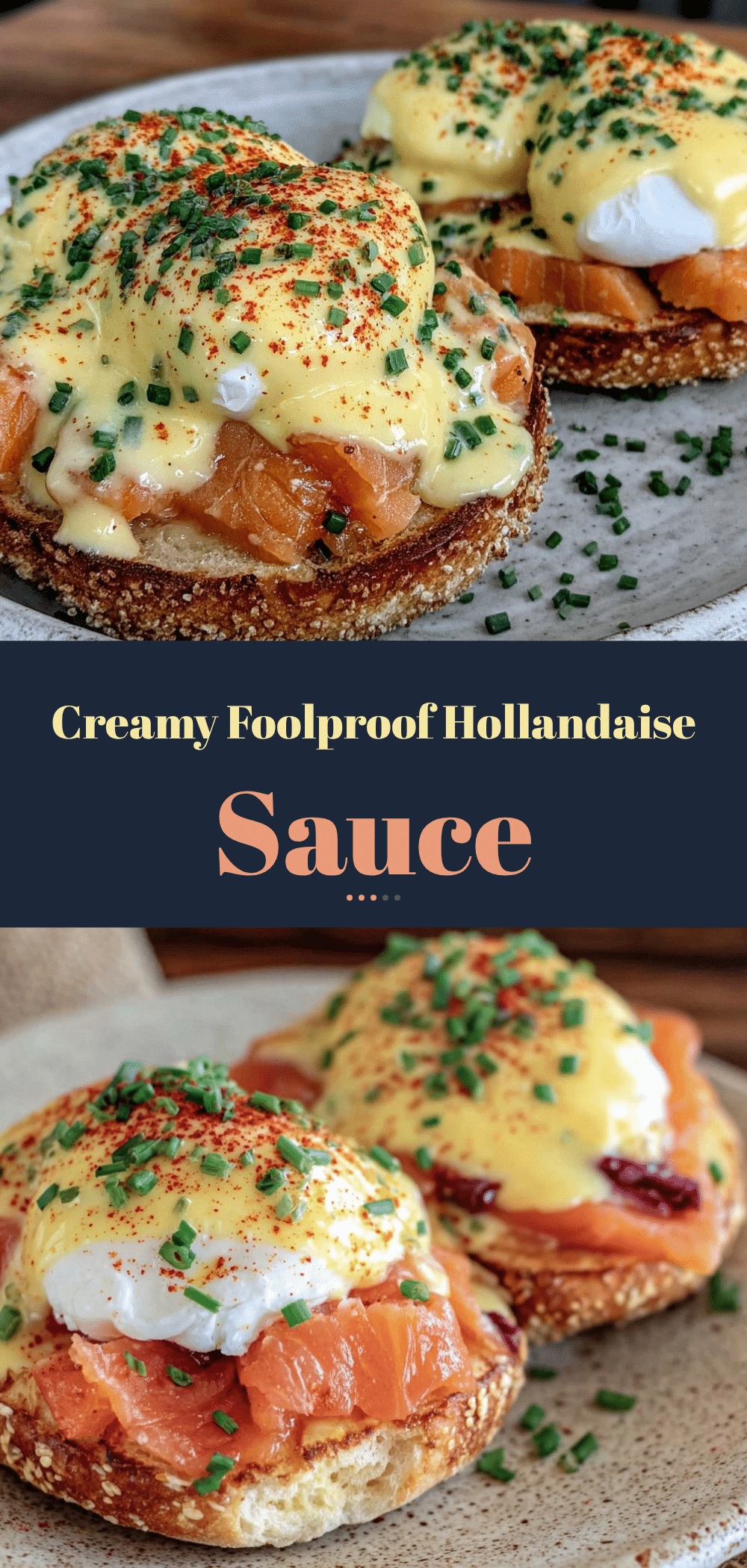

Foolproof Hollandaise Sauce
- Total Time: 15 minutes
- Yield: 6 servings 1x
Description
A reliable, 15-minute blender method for making rich, velvety hollandaise sauce that never splits. Perfect for Eggs Benedict, asparagus, steak, or any dish needing a fancy touch.
Ingredients
- 3 large egg yolks (room temperature)
- 1 cup (2 sticks / 226g) unsalted butter, melted and warm (approx. 120°F/49°C)
- 1 tablespoon fresh lemon juice
- 1 tablespoon warm water
- ½ teaspoon kosher salt (or to taste)
- a pinch cayenne pepper
- 1 teaspoon white wine vinegar (optional)
Instructions
- Prep ingredients: Ensure egg yolks are at room temperature. Melt butter in a small saucepan over low heat until warm (not hot, approx. 120°F).
- Blend the base: Place egg yolks, lemon juice, 1 tablespoon warm water, salt, and cayenne in a blender. Pulse to combine, then blend for 30 seconds until pale and frothy.
- Emulsify: Turn blender to medium speed. VERY SLOWLY drizzle the warm melted butter into the blender through the feed tube (or pour in a thin stream if using an immersion blender). This should take 3-4 minutes. Start drop-by-drop, then increase to a thin stream.
- Check consistency: Blend for another 10-15 seconds. The sauce should be thick, creamy, and glossy. If too thick, add a teaspoon of warm water. If too thin, blend longer.
- Serve immediately: Serve warm over poached eggs, asparagus, or steak. If holding, place bowl in warm water (not hot) and do not cover tightly.
Notes
Butter temperature is critical; if too hot, it will scramble the eggs. If the sauce breaks, add a tablespoon of warm water or a new egg yolk to a clean bowl and slowly blend in the broken sauce to rescue it. Do not freeze as the emulsion will break.
- Prep Time: 2 minutes
- Cook Time: 13 minutes
- Category: Sauce
- Cuisine: French
Nutrition
- Serving Size: 2 tablespoons
- Calories: 180
- Sodium: 120
- Fat: 20
- Saturated Fat: 12
- Carbohydrates: 1
- Protein: 2
Keywords: hollandaise sauce, eggs benedict, brunch recipe, easy sauce, blender hollandaise, gluten-free sauce, keto sauce, weeknight dinner