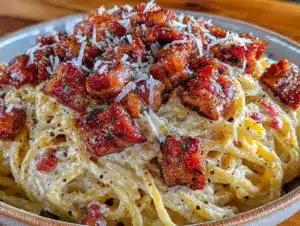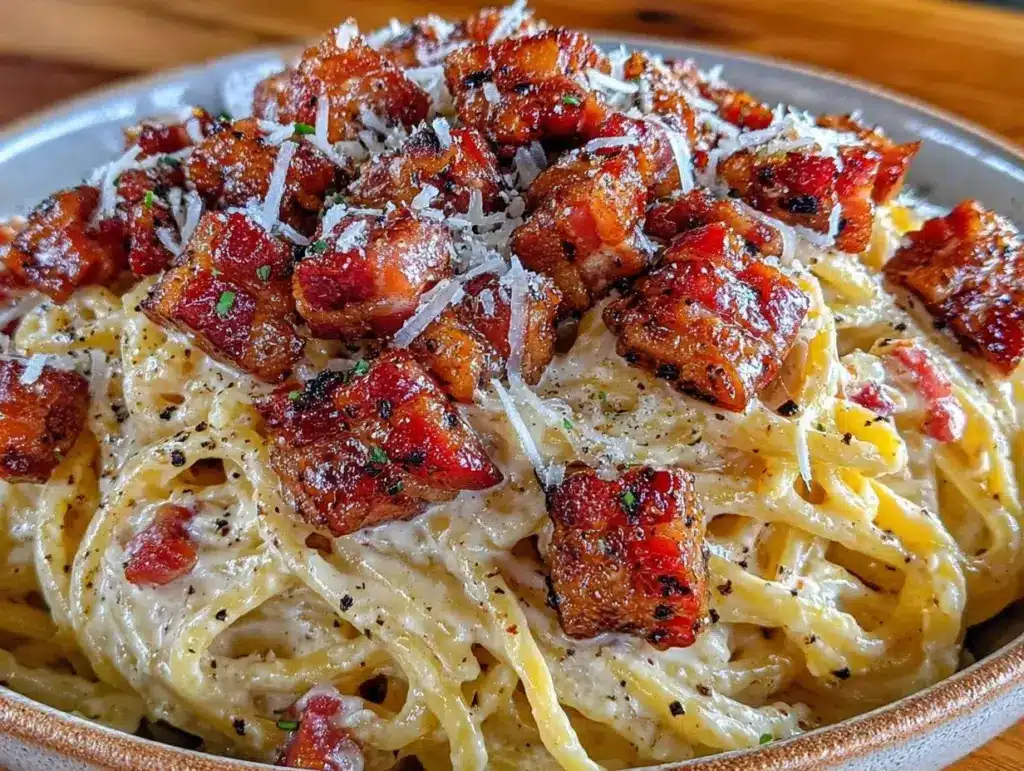
I have a confession to make. For years, I thought I hated carbonara. I thought it was just creamy pasta with bacon. I was wrong. It wasn’t the dish I hated; it was the bad versions I’d tried. The ones with heavy cream that sat heavy in your stomach, or the ones where the eggs turned into scrambled egg salad because the pan was too hot.
Then last Tuesday, at 5:15 PM, I was standing in my kitchen staring at the fridge. My husband had just texted that he was running late, my kids were hungry, and I had absolutely nothing planned. I had a package of spaghetti, a few eggs, and a package of guanciale I’d bought on a whim weeks ago and forgotten about until now. I threw it together in the time it takes to boil water. Fifteen minutes. That’s it.
We sat down to eat, and my husband took one bite and said, “Why do we order takeout on Fridays?” That’s when I knew I’d finally cracked the code. This isn’t just dinner; it’s a rescue mission in a bowl. And it’s Authentic Italian Carbonara with Guanciale and Pecorino, but tweaked for real life on weeknights.
Real talk: traditional carbonara can be intimidating. People think you need to be a professional chef to not scramble the eggs. But here’s the secret. It’s not about fancy technique. It’s about timing and temperature. Once you master the “off-heat” emulsion, you’ll make this Authentic Italian Carbonara with Guanciale and Pecorino on repeat. It’s rich, it’s salty, it’s garlicky, and it’s ready before the pizza delivery guy even picks up the phone.
Why You’ll Love This Recipe
I’ve tested this Authentic Italian Carbonara with Guanciale and Pecorino so many times that I can probably make it with my eyes closed. But even with my eyes open, it’s a win. Here’s why this dish has taken over our weeknight rotation:
- Stupidly Fast — Seriously. From boiling water to scraping the bowl clean is 15 minutes. I make this on nights when I’m exhausted and just want to sit on the couch. It’s the ultimate 5pm savior.
- Only Four Main Ingredients — You don’t need a grocery run. You need spaghetti, eggs, guanciale (or pancetta), and Pecorino Romano. If you have these in your pantry or fridge, you’re golden. It’s simpler than making cheesy ham and cheddar quesadillas, and honestly, it feels fancier.
- Creamy Without the Cream — No heavy cream needed. The sauce is made entirely from emulsified eggs and cheese. It’s silky, luxurious, and lighter than you’d expect. It coats the pasta perfectly without weighing you down.
- One-Pan Cleanup (Mostly) — You cook the pasta in one pot and the sauce in the skillet. That’s it. Two pots. One skillet. One bowl. It’s way less dishwashing than my usual crockpot creamy tuscan chicken prep, even if it’s faster.
- Restaurant Quality at Home — Guanciale renders this incredible, nutty fat that no bacon can quite replicate. Paired with sharp Pecorino, it tastes like you’re in Rome, not your kitchen in Ohio. But you can still wear your pajamas.
This recipe is for the days when you want to feel like a gourmet chef but only have the energy of a toddler. It’s reliable, delicious, and incredibly satisfying.
Ingredients You’ll Need
Here’s the thing about carbonara: because there are so few ingredients, quality matters. You can’t hide behind spices or heavy sauces. You need good stuff. Here’s what I use for my Authentic Italian Carbonara with Guanciale and Pecorino:
The Essentials
Guanciale (8 oz / 225g) — This is cured pork jowl. It has a higher fat content and a deeper, gamier flavor than bacon. It renders into liquid gold. If you absolutely cannot find guanciale, use thick-cut pancetta. Bacon works in a pinch, but it’s smokier and saltier, so reduce the added salt. I buy mine from the Italian deli counter; they usually slice it perfect.
Spaghetti (1 pound / 450g) — Long pasta is traditional. Spaghetti works, but I also love rigatoni or trofie because the sauce gets trapped in the ridges. Use any high-quality dried pasta. I stick to Barilla or De Cecco because they hold up well to the heavy sauce.
Eggs (3 large yolks + 1 whole egg) — This is the sauce base. Yolks give richness; the whole egg adds structure. Room temperature eggs emulsify better, so I take them out of the fridge while the pasta boils. Don’t use pasteurized whites; you need the fat and color from the yolks.
Pecorino Romano (1 cup / 100g, finely grated) — This is a sheep’s milk cheese. It’s sharp, salty, and pungent. It cuts through the richness of the pork. Do not use Parmesan unless you’re mixing it 50/50 with Pecorino. Pure Parmesan is too mild and sweet for this. Grate it yourself. Pre-grated cheese has cellulose that stops it from melting smoothly.
The Flavor Boosters
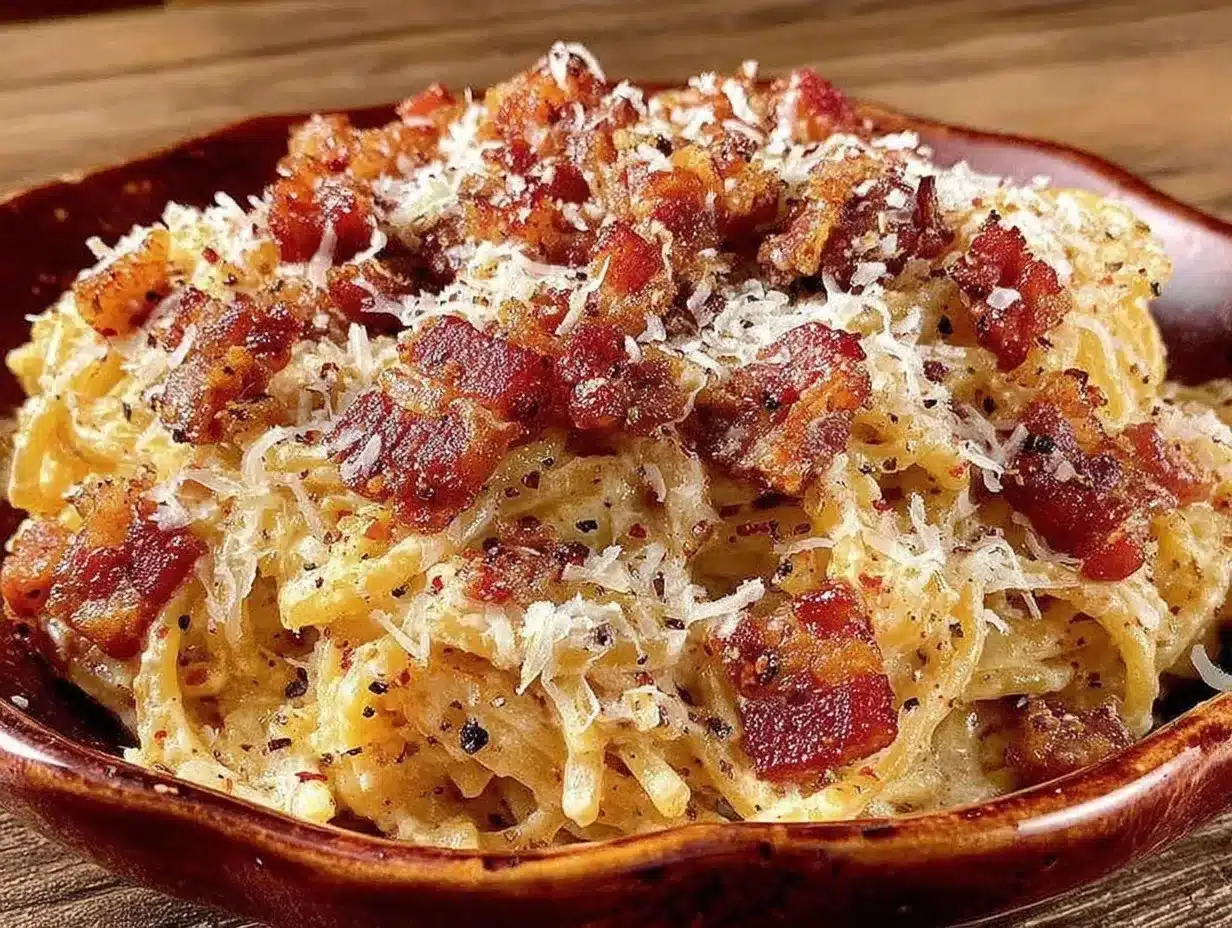
Black Pepper (2 teaspoons, freshly cracked) — This isn’t just seasoning; it’s a main character. You want to taste the pepper. Use a pepper mill and grind it coarse. The heat from the pasta will bloom the pepper oils, making the whole dish aromatic.
Garlic (2 cloves, minced) — Authentic Roman carbonara doesn’t use garlic, but I’m a home cook, and I love garlic. I sauté it with the guanciale for aroma, then fish it out before adding the pasta so you don’t get big chunks of soft garlic. It’s my personal twist.
Salt — For the pasta water only. The guanciale and Pecorino are already very salty, so you likely won’t need extra salt in the sauce.
Equipment Needed
You don’t need fancy gadgets. Here’s what I actually use:
Large skillet (12-inch) — You need enough surface area to cook the guanciale in a single layer so it crisps up. A small pan will steam the meat. I use a stainless steel skillet because it gets hot fast.
Large pot — For boiling the spaghetti. Needs to hold 4 quarts of water.
Mixing bowl — For whisking the eggs and cheese. Glass or ceramic is fine.
Tongs — Essential for transferring pasta directly from the water to the pan. It keeps some starchy water with the noodles.
Whisk — For the egg mixture. Make sure there are no lumps of yolk.
How to Make It: Step-by-Step
Alright, let’s make this! I’m walking you through exactly how I do it. The key is to have everything prepped before the pasta starts boiling. This is Authentic Italian Carbonara with Guanciale and Pecorino, and timing is everything.
Step 1: Prep the Egg Mixture (2 minutes)
In your mixing bowl, whisk the 3 egg yolks and 1 whole egg until smooth. Add the finely grated Pecorino Romano and 2 teaspoons of freshly cracked black pepper. Mix it into a thick paste. It should look like wet sand. Set this aside. This is your sauce base.
Step 2: Cook the Guanciale (5-7 minutes)
Heat your large skillet over medium heat. Add the cubed guanciale. Do not add oil. The guanciale will render its own fat. Cook for 5-7 minutes, stirring occasionally, until the pieces are golden brown and crispy. If you added garlic, add it now and cook for 30 seconds until fragrant, then remove the garlic pieces with a slotted spoon. You want the flavored fat, not the burnt garlic bits.
Turn off the heat. This is crucial. You want the pan warm, not hot, so you don’t scramble the eggs later.
Step 3: Boil the Pasta (8-10 minutes)
Bring a large pot of salted water to a boil. The water should taste like the sea. Add the spaghetti. Cook until al dente, usually 1-2 minutes less than the package instructions. You want it firm because it will finish cooking in the pan.
IMPORTANT: Before draining, scoop out 1 cup of the starchy pasta water. Set it aside. This liquid gold is what makes the sauce creamy.
Step 4: Combine Pasta and Fat (1 minute)
Using tongs, transfer the hot pasta directly from the pot to the skillet with the guanciale and fat. Toss well. The heat from the pasta will warm the fat and coat every strand. If the pan seems dry, add a splash of the reserved pasta water.
Step 5: The Emulsion (The Scary Part)
Remove the skillet from the heat completely. Wait 30 seconds. The pan should still be hot, but not sizzling. Pour the egg and cheese mixture over the pasta. Add a splash of the reserved pasta water (about ¼ cup).
Now, the dance. Toss and stir vigorously and continuously. The residual heat of the pasta and pan will cook the eggs gently, creating a creamy sauce. If it looks too thick, add more pasta water. If it looks too thin, keep tossing. You’re looking for a glossy, creamy coating, not scrambled eggs.
Step 6: Serve Immediately
Plate it up while it’s steaming hot. Top with extra Pecorino and a crack of black pepper. Eat it right now. It waits for no one.
Expert Tips & Tricks
Here’s everything I’ve learned from making this dozens of times. These tips will save you from my mistakes.
The Temperature Trick
The biggest mistake people make is keeping the pan on the heat when adding the eggs. If the pan is too hot, you get scrambled eggs. If it’s too cold, you get raw egg. The trick is to turn off the heat, add the pasta, toss for a minute to cool the pan slightly, then add the eggs. The pasta’s heat is enough.
Save the Pasta Water
I cannot stress this enough. That starchy water is the binder. It helps the fat and eggs emulsify into a smooth sauce. Without it, you get a greasy mess. Have a measuring cup ready before you drain.
Grate Your Own Cheese
Pre-grated Pecorino is coated in potato starch to prevent clumping. That starch prevents melting. Buy a wedge of Pecorino Romano and grate it fine. It takes 3 minutes and makes a massive difference in texture.
Don’t Skip the Pepper
Carbonara means “coal miner style.” The black pepper specks are iconic. Use fresh cracked pepper. Pre-ground pepper loses its punch. You want that aromatic kick to cut through the rich pork.
Variations & Substitutions
Once you’ve nailed the basic version, here’s how you can mix it up. I’ve tried all of these.
The “I Can’t Find Guanciale” Swap
Use pancetta. It’s cured pork belly. It’s leaner than guanciale, so cook it a bit longer to render the fat. Or use thick-cut bacon. It’s smokier, so it changes the flavor profile, but it’s still delicious. Just rinse the bacon to remove some smoke curing salts.
The Veggie Add-In
I like to add a handful of frozen peas in the last minute of pasta cooking. They add a pop of sweetness and color. It’s not traditional, but it’s great if you’re feeding picky eaters. Or toss in some sautéed spinach after you add the pasta for a nutrient boost.
The Lighter Version
Use 2 whole eggs instead of 3 yolks + 1 whole egg. It’s slightly less rich but still creamy. Or swap half the Pecorino for Parmesan. It’s milder and less salty.
Dietary Mods
Gluten-Free: Use gluten-free spaghetti. It tends to be more fragile, so be gentle when tossing. The sauce works perfectly with GF pasta.
Dairy-Free: This is hard. The cheese and eggs are central. You could try a cashew cream base, but it won’t taste like carbonara. I’d suggest skipping this one if you’re dairy-free.
Serving & Storage
Carbonara is best eaten immediately. It does not travel well. The sauce continues to thicken as it cools, and it can become gluey if refrigerated.
How to Serve
I serve this straight from the pan or in deep bowls. It’s great with a simple arugula salad tossed in lemon juice to cut the richness. Garlic bread is optional, but I usually skip it because the pasta is so flavorful. If you’re making this for a date night, pair it with a crisp Pinot Grigio or a light Chianti.
Storage
Refrigerator: Leftovers can be stored in an airtight container for up to 2 days. The sauce will harden. To reheat, add a splash of water or milk and warm gently in a skillet over low heat, stirring constantly. Do not microwave—it will separate.
Freezing: Do not freeze carbonara. The eggs and cheese will separate and become grainy when thawed. It’s just not worth it. Make fresh batches.
Nutrition Information
I’m not a nutritionist, but here’s the breakdown if you’re tracking. This is a rich dish, so portion control matters.
Per Serving (based on 4 servings):
- Calories: 650
- Protein: 28g
- Carbs: 65g
- Fat: 32g
- Saturated Fat: 12g
- Sodium: 850mg
It’s high in sodium from the cured pork and cheese, so drink plenty of water. But it’s also high in protein and satisfying. It’s comfort food, not diet food. Enjoy it.
Final Thoughts
So that’s my go-to Authentic Italian Carbonara with Guanciale and Pecorino! It’s the answer to “what’s for dinner” when I’m tired, broke, or just lazy. It’s fast, it’s cheap, and it tastes expensive. My family loves it, and I love that it uses simple ingredients I always have on hand.
Make it yours! Add chili flakes if you like heat. Use more garlic if you’re a garlic lover. The best recipes are the ones you adapt. If you make this, drop a comment and let me know what you think! I love hearing how recipes turn out in your kitchen.
Happy cooking! And I hope your kitchen smells as amazing as mine did tonight.
Frequently Asked Questions
Can I use bacon instead of guanciale?
Yes! While guanciale is traditional, pancetta or thick-cut bacon works fine. Bacon is smokier, so reduce any added salt. Guanciale has a more delicate, pork-forward flavor. If you use bacon, try to find uncured or low-sodium versions to avoid oversalting.
Why did my eggs scramble?
The pan was too hot when you added the egg mixture. Always remove the pan from the heat before adding the eggs. The residual heat of the pasta is enough to cook them gently. If you’re nervous, let the pan sit off the heat for a full minute before pouring in the eggs.
Can I make this ahead of time?
Not really. Carbonara is best fresh. The sauce thickens as it cools and can become clumpy. You can prep the egg mixture and cook the guanciale ahead, but combine them right before serving for the best texture.
Is Pecorino Romano the same as Parmesan?
No. Pecorino is made from sheep’s milk and is sharper, saltier, and tangier. Parmesan (Parmigiano-Reggiano) is cow’s milk and is nuttier and sweeter. Traditional carbonara uses Pecorino. You can use a mix of both (half and half) if Pecorino is too strong for you.
Can I add cream to make it safer/easier?
Some people add a splash of cream to stabilize the sauce, but that’s not authentic Roman carbonara. If you’re worried about scrambling eggs, just focus on the temperature control. The egg and cheese method creates a silkier, lighter sauce than cream ever could.
How do I reheat leftovers?
Add a splash of water or milk to a skillet, add the leftover pasta, and warm gently over low heat while stirring. The liquid re-emulsifies the sauce. Avoid the microwave, as it heats unevenly and can make the eggs rubbery.
Pin This Recipe!
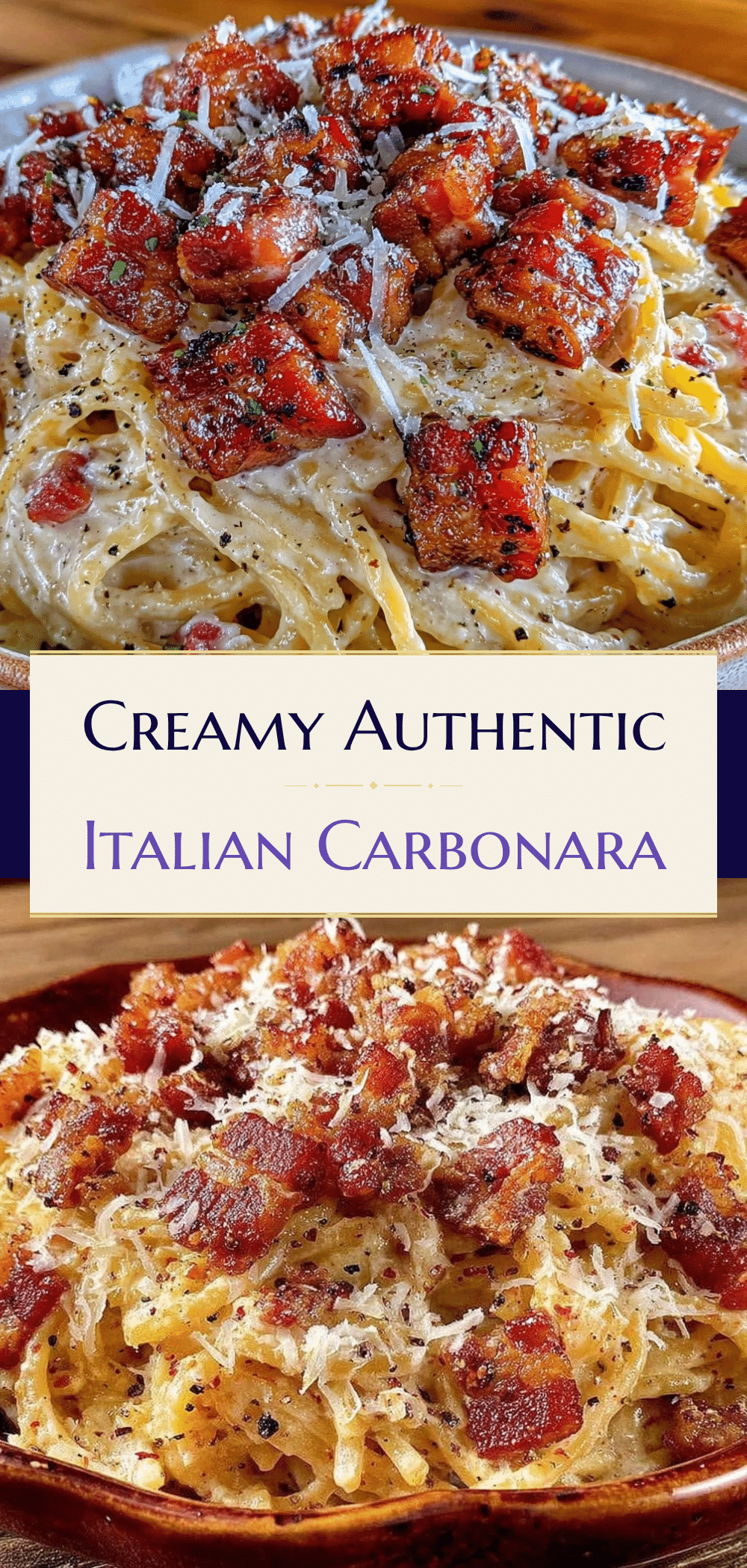
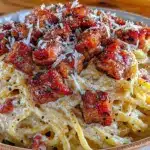
Authentic Italian Carbonara: Easy 15-Minute Weeknight Dinner
- Total Time: 15 minutes
- Yield: 4 servings 1x
Description
A rich, creamy, and authentic Italian carbonara made with guanciale, Pecorino Romano, and eggs. This weeknight-friendly recipe skips the heavy cream for a lighter, restaurant-quality dish ready in just 15 minutes.
Ingredients
- 8 oz (225g) guanciale, cubed (or thick-cut pancetta/bacon)
- 1 pound (450g) spaghetti (or rigatoni/trofie)
- 3 large egg yolks
- 1 large whole egg
- 1 cup (100g) Pecorino Romano, finely grated
- 2 teaspoons freshly cracked black pepper
- 2 cloves garlic, minced (optional)
- Salt (for pasta water only)
Instructions
- In a mixing bowl, whisk 3 egg yolks and 1 whole egg until smooth. Add the finely grated Pecorino Romano and 2 teaspoons of freshly cracked black pepper. Mix into a thick paste and set aside.
- Heat a large skillet over medium heat. Add the cubed guanciale without oil. Cook for 5-7 minutes, stirring occasionally, until golden brown and crispy. If using garlic, add it now and cook for 30 seconds until fragrant, then remove garlic pieces with a slotted spoon.
- Turn off the heat. The pan should remain warm but not hot.
- Bring a large pot of salted water to a boil. Add spaghetti and cook until al dente, usually 1-2 minutes less than package instructions.
- Before draining, scoop out 1 cup of starchy pasta water and set aside.
- Using tongs, transfer the hot pasta directly to the skillet with the guanciale and fat. Toss well to coat.
- Remove the skillet from the heat completely and wait 30 seconds. Pour the egg and cheese mixture over the pasta. Add about ¼ cup of reserved pasta water.
- Toss and stir vigorously and continuously. The residual heat will gently cook the eggs, creating a creamy, glossy sauce. Add more pasta water if too thick.
- Serve immediately, topped with extra Pecorino and black pepper.
Notes
The key to perfect carbonara is temperature control. Always remove the pan from the heat before adding the egg mixture to prevent scrambling. Use freshly grated Pecorino Romano, as pre-grated cheese contains anti-caking agents that prevent smooth melting. Save the starchy pasta water; it is essential for emulsifying the sauce. Do not freeze this dish as the eggs and cheese will separate.
- Prep Time: 2 minutes
- Cook Time: 13 minutes
- Category: Main Course
- Cuisine: Italian
Nutrition
- Serving Size: 1 plate (approx. 1/4
- Calories: 650
- Sugar: 2
- Sodium: 850
- Fat: 32
- Saturated Fat: 12
- Carbohydrates: 65
- Fiber: 3
- Protein: 28
Keywords: carbonara, italian pasta, guanciale, pecorino romano, weeknight dinner, easy pasta, authentic carbonara, 15 minute meals