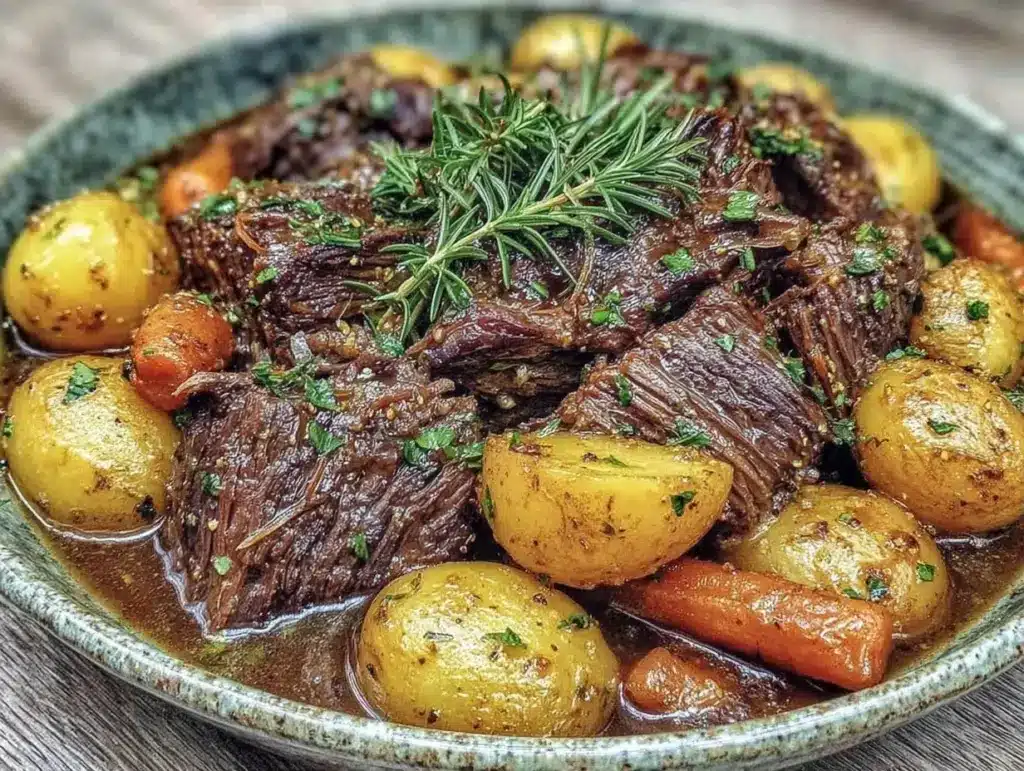
Last Tuesday, I walked through the door at 5:15 PM completely drained. You know the feeling. My brain was mush, my kid was already whining about dinner, and the last thing I wanted to do was stand over a stove for an hour. I opened the freezer and pulled out a roast I’d bought on sale three days prior, thinking, “Well, this is either going to be tender perfection or a shoe leather disaster.”
I threw it all in the pot—beef, carrots, potatoes, onions, broth—and set it low. Then I went to change clothes. Then I made a coffee. Then I scrolled on my phone for twenty minutes. When I walked back to the kitchen, the house smelled like a warm hug, and the meat was falling apart with just a fork.
This Classic Beef Pot Roast with Carrots and Potatoes is my secret weapon for those chaotic evenings. It’s the ultimate “set it and forget it” dinner. I’ve tested this method so many times, tweaking the searing time and the liquid ratios, and I can confidently say this is the easiest, most forgiving way to make pot roast that actually tastes like you spent all day in the kitchen (even though you didn’t).
It’s tender, savory, and packed with veggies. No fancy techniques, no specialty equipment, and absolutely zero stress. If you’re staring at the clock wondering what to cook, this is your answer. Let’s get dinner on the table.
Why You’ll Love This One-Pot Beef Pot Roast
There are about a dozen reasons I keep coming back to this recipe, but let’s be real: it’s mostly because it takes the pressure off. Here’s why this pot roast has earned a permanent spot in our weekly rotation:
Minimal Active Time — Seriously, you only need to chop veggies and sear the meat. That’s about 15 minutes of active work. The rest is just waiting. I’ve made this while helping with homework, folding laundry, or literally just sitting on the couch.
One Pot, Zero Cleanup — This is the biggest selling point for me. You sear the beef in the Dutch oven, throw everything else in there, and cook it all together. No extra pans, no extra dishes. When dinner is done, you just wash one pot. It’s a win.
Forgiving Cooking Method — Unlike a steak where you need to hit the perfect temperature, a pot roast is very chill. If it cooks for 30 minutes longer than planned, it’s still tender. If you chop the carrots a bit chunky or small, it doesn’t matter. It’s hard to mess this up.
Leftovers Are Even Better — I don’t know if it’s magic, but the flavors deepen overnight. We usually have enough for lunch the next day, and the meat is even more tender. I pack it in sandwiches or reheat it over rice. It’s basically meal prep for dinner.
Comfort Food for Everyone — My kids actually eat the carrots from this. I don’t know why, but in the rich gravy, they’re sweet and tender. It’s a meal that satisfies picky eaters and adults alike without any fuss.
This is my go-to when I need dinner to just work. No complicated techniques, no weird ingredients, just reliable, delicious food that makes everyone happy.
Ingredients You’ll Need
Here’s the best part: you probably have most of this already. This isn’t a recipe that requires a trip to three different specialty stores. It’s pantry-friendly and straightforward.
For the Roast and Base
Beef Chuck Roast (3-4 pounds / 1.3-1.8kg) — This is the star. Chuck roast has the right amount of fat and connective tissue to break down into tender meat. Look for a piece that’s well-marbled. If it looks too lean, it’ll be dry. Boneless is easier to slice, but bone-in has more flavor. I usually grab whatever is on sale.
Vegetable Oil (2 tablespoons / 30ml) — For searing. You need a high smoke point oil. Olive oil works too, but vegetable or canola is safer for high heat. I use vegetable oil because it’s neutral and cheap.
All-Purpose Flour (2 tablespoons / 15g) — This coats the beef before searing. It creates a crust and helps thicken the gravy later. Don’t skip this step—it adds texture and body to the sauce.
Salt and Black Pepper — To taste. I use about 1 teaspoon of salt and half a teaspoon of pepper for the rub. Seasoning the meat directly is crucial for flavor.
The Veggies
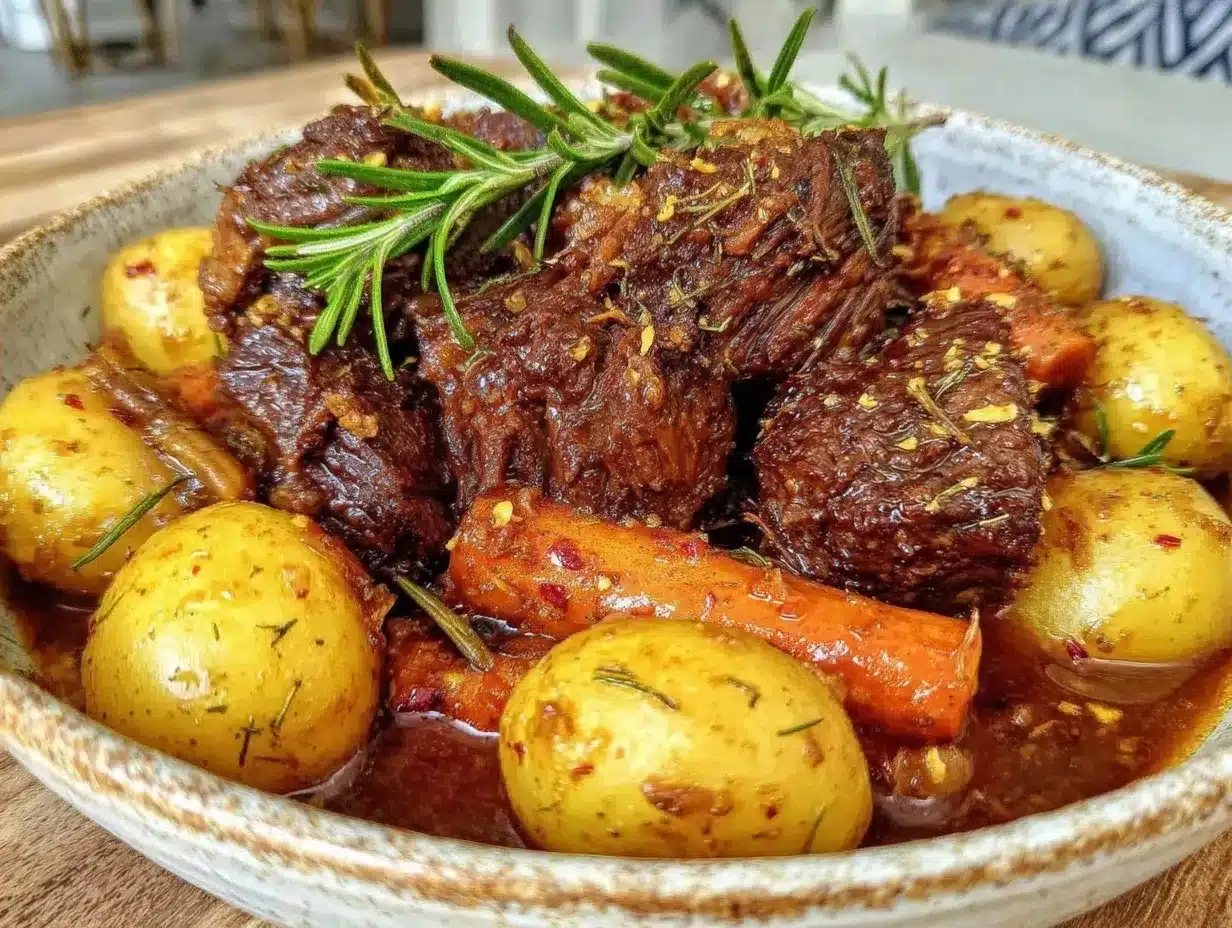
Yellow Onions (2 medium, chopped / about 300g) — Onions add sweetness and depth. I use yellow because they hold up well to long cooking. Chop them into large chunks so they don’t disappear into mush.
Carrots (1 pound / 450g) — Peeled and cut into large chunks or diagonal slices. If you cut them too small, they’ll dissolve. I like big, chunky carrots that you can eat whole.
Red Potatoes (1.5 pounds / 700g) — Halved or quartered. Red potatoes are waxy and hold their shape better than russets, which can fall apart. Yukon Golds work too if you prefer a buttery texture. Just avoid russets if you want distinct pieces.
Garlic (4 cloves, minced / about 2 tablespoons) — Fresh garlic only. Jarred garlic has a different flavor profile that doesn’t work as well here. Mince it finely so it disperses evenly.
The Liquid and Seasoning
Beef Broth (2 cups / 480ml) — Low-sodium is best so you can control the saltiness. Chicken broth works in a pinch, but beef gives that deep, rich flavor. Look for a good quality brand; the broth is the base of the gravy.
Worcestershire Sauce (1 tablespoon / 15ml) — This is the secret umami bomb. It adds a savory depth that salt alone can’t achieve. A little goes a long way.
Dried Thyme (1 teaspoon) — Thyme pairs perfectly with beef and carrots. Fresh thyme works too, but use twice as much. Dried is more forgiving and easier to store.
Bay Leaves (2 leaves) — They infuse the broth with a subtle herbal note. Remove them before serving, or your family will complain about finding leaves in their food.
Equipment Needed
You don’t need fancy equipment for this. Here’s what I actually use:
Dutch Oven — I use a 6-quart enameled cast iron Dutch oven. It holds heat incredibly well, which is essential for braising. If you don’t have one, a heavy-bottomed stockpot or even a large roasting pan (if you have a lid or foil to cover) works. The key is that it goes from stovetop to oven.
Sharp Chef’s Knife — For chopping the onions, carrots, and potatoes. A dull knife makes chopping harder and more dangerous. I learned this the hard way with a blunted edge.
Cutting Board — Any size works. I use a large plastic one for easier cleanup.
Tongs — For flipping the beef. Tongs are better than a fork because you don’t pierce the meat and lose juices.
Wooden Spoon — For stirring the veggies and deglazing the pot. Silicone works too. Don’t use metal on enameled cast iron if you want to keep it looking nice.
Measuring Cups and Spoons — Standard stuff. Dollar store versions work fine.
How to Make It: Step-by-Step
Alright, let’s make this! I’m walking you through exactly how I do it, including the little tricks I’ve picked up.
Step 1: Prep the Beef (5 minutes)
Pat the chuck roast dry with paper towels. This sounds minor, but dry meat sears better. Wet meat steams. Season all sides generously with salt and pepper. Then, roll the roast in the flour, shaking off any excess. You want a thin, even coating. This will help thicken the gravy later.
Step 2: Sear the Meat (5-7 minutes)
Heat the vegetable oil in your Dutch oven over medium-high heat. When the oil shimmers, add the roast. Don’t crowd the pan. Sear for 2-3 minutes per side until you have a nice brown crust. You’re not cooking it through; you’re just browning the outside for flavor. If your pot is small, sear in batches. Remove the beef and set it aside on a plate.
Step 3: Sauté the Aromatics (3 minutes)
Reduce the heat to medium. Add the chopped onions to the same pot. Cook for 2-3 minutes, scraping up those brown bits from the bottom of the pot. Those bits are flavor gold. Add the garlic and cook for 30 seconds until fragrant. Don’t let the garlic burn.
Step 4: Add Veggies and Liquid (2 minutes)
Add the carrots and potatoes to the pot. Stir them around to coat them in the oil and onion mixture. Pour in the beef broth and Worcestershire sauce. Add the thyme and bay leaves. Stir everything together.
Step 5: Braise the Roast (2.5-3 hours)
Return the beef to the pot, nestling it on top of the veggies. The liquid should come about halfway up the meat, not necessarily cover it completely. Cover the pot with a tight-fitting lid. Transfer to a preheated 325°F (165°C) oven.
Cook for 2.5 to 3 hours. The roast is done when it’s fork-tender and pulls apart easily. If it’s still tough, give it another 30 minutes. Don’t rush this. Low and slow is the key.
Step 6: Rest and Serve (10 minutes)
Remove the pot from the oven. Carefully lift the roast out and place it on a cutting board. Let it rest for 10 minutes while you deal with the veggies and gravy. This keeps the juices inside. Slice the beef against the grain into thick chunks.
Ladle the carrots, potatoes, and gravy over the sliced meat. Serve immediately.
Expert Tips & Tricks
Here’s everything I’ve learned from making this dozens of times. These tips will save you from my mistakes.
Don’t Skip the Sear — I know it’s tempting to just throw everything in the pot. But searing the beef creates Maillard reaction flavors that make the dish taste rich and complex. It’s the difference between “boiled beef” and “pot roast.”
Scrape the Bottom — When you add the broth, use a wooden spoon to scrape every bit of browned fond from the bottom of the pot. That’s where the flavor lives. If it doesn’t come up easily, add a splash more broth and keep scraping.
Check for Tenderness — Start checking at the 2.5-hour mark. Use a fork to poke the meat. If it goes in and out with no resistance, it’s done. If you feel resistance, keep cooking. Every oven is different, so trust the fork, not the clock.
Thicken the Gravy — If your gravy looks too thin after removing the meat, you can make a slurry. Mix 1 tablespoon of cornstarch with 1 tablespoon of cold water. Stir it into the simmering liquid in the pot. Let it bubble for 2 minutes until thickened. This is optional but nice if you like extra sauce.
Use Cold Broth — Some chefs swear by adding cold liquid to a hot pot to create steam and tenderize. I just use whatever I have. It doesn’t make a huge difference, but if you’re worried about the meat seizing, cold broth is safer.
Variations & Substitutions
Once you’ve nailed the basic version, here’s how you can mix it up. I’ve tried all of these.
Slow Cooker Version — If you want to set it and forget it even more, sear the meat and veggies as directed, then dump everything into a slow cooker. Cook on low for 8 hours or high for 4-5 hours. The texture might be slightly softer, but it’s incredibly easy.
Red Wine Addition — Swap half the beef broth for red wine. Cabernet or Merlot works great. It adds a richer, more complex flavor. I do this when I want to feel fancy.
Add Mushrooms — Sauté sliced cremini mushrooms with the onions. They add an earthy, meaty texture that complements the beef. I love this version.
Gluten-Free — Use gluten-free beef broth and skip the flour coating, or use a gluten-free flour blend. Thicken with cornstarch at the end. Everything else is naturally gluten-free.
Dairy-Free — This recipe is naturally dairy-free. Just ensure your beef broth doesn’t contain hidden dairy additives (rare, but check labels).
Serving & Storage
I usually serve this straight from the Dutch oven at the dinner table—it looks rustic and stays warm. But here are other ways I’ve enjoyed it:
Side Dishes: This is a complete meal, so you don’t need much else. But if you want, serve with crusty bread to soak up the gravy. A simple green salad with vinaigrette cuts through the richness nicely. I also like roasted green beans on the side.
Leftovers: Store in an airtight container in the fridge for up to 4 days. The meat gets even more tender as it sits. Reheat gently on the stovetop with a splash of broth to keep it moist. You can also freeze it for up to 3 months, though the potatoes might get a bit grainy when thawed.
Meal Prep: This is great for meal prep. Portion it out into containers with rice or mashed potatoes. It reheats beautifully in the microwave.
Nutrition Information
I’m not a nutritionist, but here’s the breakdown if you’re tracking. This is based on 6 servings.
Per Serving:
- Calories: 450
- Protein: 35g
- Carbs: 30g
- Fiber: 4g
- Fat: 20g
- Sodium: 600mg (varies by broth)
It’s a hearty, protein-rich meal. The vegetables add fiber and vitamins. It’s not “diet” food, but it’s balanced and satisfying. If you want to lighten it up, you can skim the fat off the top of the gravy before serving.
Final Thoughts
So that’s my go-to Classic Beef Pot Roast with Carrots and Potatoes! I’ve probably talked your ear off at this point, but when you make a recipe this often, you have a lot to say about it.
This has saved weeknight dinners more times than I can count. It’s my answer to “what’s for dinner” when I’m tired, don’t want takeout, and still want something that tastes really good. My kids are happy, my husband’s happy, and I’m happy because I’m not stressed about cooking.
Make it yours! Try different veggies, swap in your favorite herbs, or add a splash of wine. The best recipes are the ones you adapt to your family’s tastes.
If you make this, drop a comment and let me know what you think! I love hearing how recipes turn out in your kitchen. And if something doesn’t work, tell me that too—I’m here to help troubleshoot.
Happy cooking! And I hope your kitchen smells half as good as mine does right now.
Frequently Asked Questions
Can I use a different cut of beef?
Chuck roast is best because of its fat content. You can use brisket or round roast, but they can be leaner and tougher. If you use round roast, be very careful not to overcook it, and check for tenderness frequently. Chuck is the most forgiving.
Why did my pot roast turn out tough?
It probably wasn’t cooked long enough. Tough cuts of beef need time to break down the connective tissue. If it’s still chewy, put it back in the oven for another 30-45 minutes. Don’t pull it out early.
Can I make this in the Instant Pot?
Yes! Sear the meat using the “Sauté” function, then add everything else. Cook on High Pressure for 60 minutes, then let it Natural Release for 15 minutes. It’s faster, but you lose some of the deep braised flavor. Still delicious though.
Can I freeze leftovers?
Yes, for up to 3 months. The meat freezes well. The potatoes might change texture slightly, becoming a bit crumbly, but they’re still tasty. Let it thaw in the fridge overnight before reheating.
What if I don’t have a Dutch oven?
You can use a large stockpot with a lid, or a roasting pan covered tightly with foil. The key is that it goes into the oven and traps steam. Just make sure the material is oven-safe.
Can I add celery?
Absolutely. Celery is a classic pot roast vegetable. Add 2-3 stalks, chopped, along with the onions. It adds a nice savory note.
How do I reheat without it drying out?
Add a splash of broth or water when reheating. Cover it and heat gently. The microwave can dry it out if you’re not careful, so stovetop is best. If using a microwave, cover it with a damp paper towel.
Pin This Recipe!
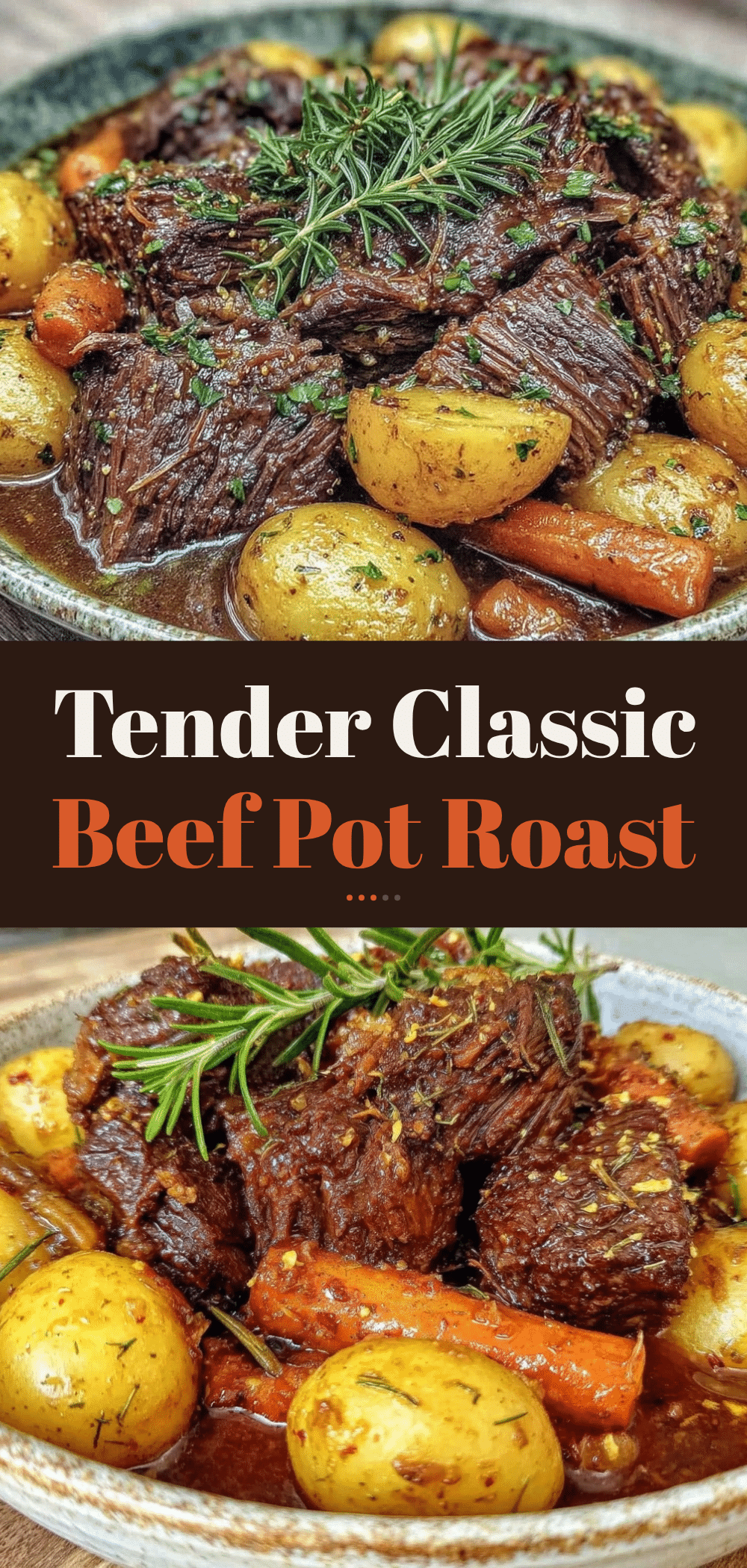
Classic Beef Pot Roast with Carrots and Potatoes
- Total Time: 3 hours
- Yield: 6 servings 1x
Description
A tender, savory one-pot beef chuck roast braised with carrots, potatoes, and aromatics. This forgiving, ‘set it and forget it’ meal is perfect for busy weeknights and yields delicious leftovers.
Ingredients
- 3–4 pounds beef chuck roast
- 2 tablespoons vegetable oil
- 2 tablespoons all-purpose flour
- 1 teaspoon salt
- 0.5 teaspoon black pepper
- 2 medium yellow onions, chopped
- 1 pound carrots, peeled and cut into large chunks
- 1.5 pounds red potatoes, halved or quartered
- 4 cloves garlic, minced
- 2 cups beef broth (low-sodium)
- 1 tablespoon Worcestershire sauce
- 1 teaspoon dried thyme
- 2 bay leaves
Instructions
- Pat the chuck roast dry with paper towels. Season all sides generously with salt and pepper, then roll in flour to coat evenly, shaking off excess.
- Heat vegetable oil in a Dutch oven over medium-high heat. Sear the roast for 2-3 minutes per side until browned. Remove beef and set aside.
- Reduce heat to medium. Add chopped onions to the pot and cook for 2-3 minutes, scraping up browned bits. Add garlic and cook for 30 seconds until fragrant.
- Add carrots and potatoes to the pot, stirring to coat in the oil and onion mixture.
- Pour in beef broth and Worcestershire sauce. Add thyme and bay leaves, stirring to combine.
- Return the beef to the pot, nestling it on top of the vegetables. Ensure liquid comes halfway up the meat.
- Cover with a tight-fitting lid and transfer to a preheated 325°F (165°C) oven.
- Braise for 2.5 to 3 hours, or until the meat is fork-tender and pulls apart easily.
- Remove pot from oven. Lift roast out and let rest for 10 minutes on a cutting board.
- Slice beef against the grain into thick chunks.
- Ladle carrots, potatoes, and gravy over the sliced meat and serve immediately.
Notes
Do not skip searing the beef for better flavor. Scrape the bottom of the pot when adding broth to incorporate fond. If gravy is too thin, thicken with a cornstarch slurry. For slow cooker version, sear ingredients then cook on low for 8 hours. Leftovers keep in fridge for 4 days or freeze for 3 months.
- Prep Time: 15 minutes
- Cook Time: 2 hours 45 minutes
- Category: Main Course
- Cuisine: American
Nutrition
- Serving Size: 1 slice of beef with
- Calories: 450
- Sugar: 6
- Sodium: 600
- Fat: 20
- Saturated Fat: 7
- Carbohydrates: 30
- Fiber: 4
- Protein: 35
Keywords: beef pot roast, one pot meal, easy dinner, chuck roast, comfort food, slow cooked beef, weeknight dinner